
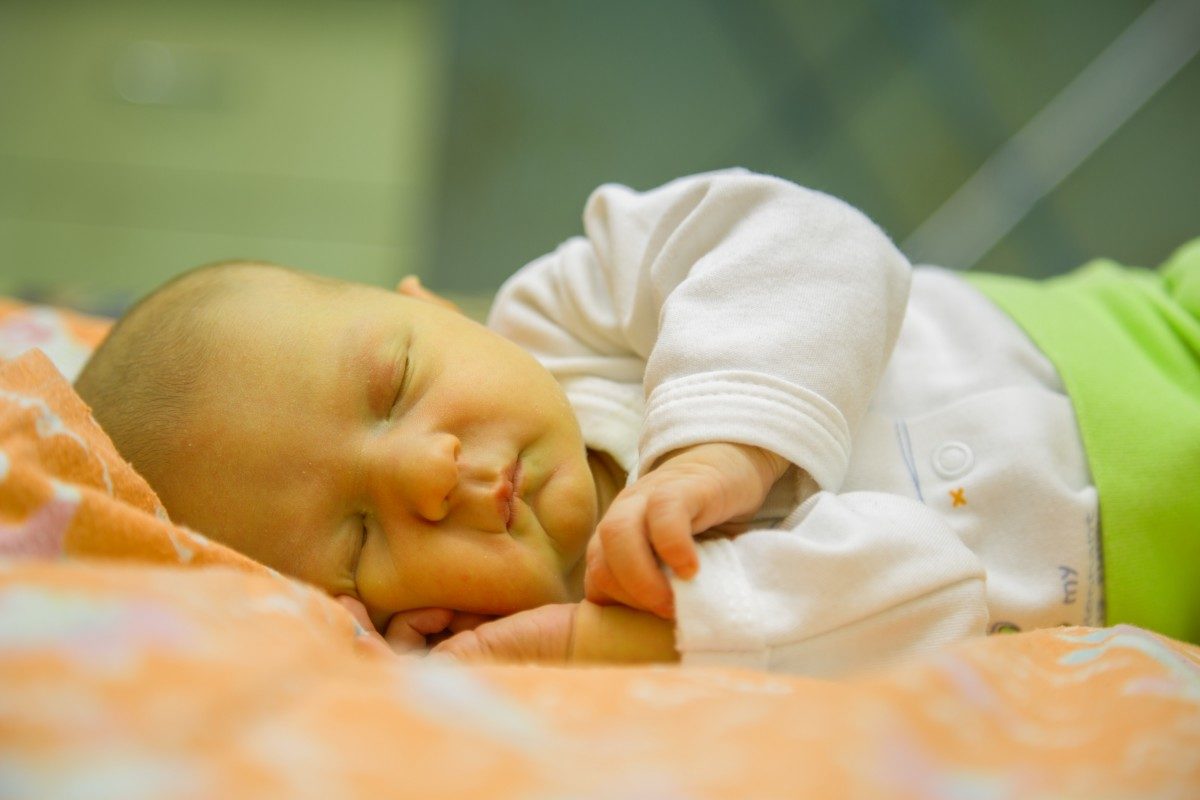
Newborn jaundice is when a baby’s skin and eyes turn yellow from too much bilirubin. It usually resolves as their liver matures and they start feeding, but if it persists, there may be another cause.
In most cases, jaundice (also called hyperbilirubinemia) in newborns will disappear within 2 to 3 weeks.
The higher the bilirubin levels are, the more the baby is at risk for brain damage.
Causes and types
Bilirubin is a yellow pigment produced during the typical breakdown of red blood cells. In older babies and adults, the liver processes bilirubin, passing it through the intestinal tract. However, a newborn’s still-developing liver may not be mature enough to do this.
There are two types of newborn jaundice: physiological and pathological.
- Physiological jaundice is the most common, accounting for 75% of cases. This just means the baby’s metabolism cannot clear out bilirubin as quickly as it is produced. This type typically develops in a few days and clears up on its own in a few weeks when the breakdown of red blood cells slows and liver function improves.
- Pathological jaundice means that there is another underlying condition that’s causing a problem with filtering out bilirubin. This type may show up in the first 24 hours after birth.
Possible causes include:
- blood type incompatibilities such as rhesus factor (Rh) or ABO,
- breakdown of red blood cells (hemolysis),
- conditions that affect how the body processes bilirubin like Gilbert’s syndrome and Crigler-Najjar syndrome,
- diabetes in the birthing parent,
- congenital hypothyroidism,
- intestinal obstruction,
- pyloric stenosis,
- breastfeeding jaundice, which can happen if the baby isn’t feeding well,
- breastmilk jaundice, which is a reaction to substances in the milk. It typically occurs one week after birth. The condition can sometimes last up to 12 weeks, it rarely causes complications in healthy, breast-fed infants.
The exact cause of breast milk jaundice isn’t known. However, it may be linked to a substance in the breast milk that prevents certain proteins in the infant’s liver from breaking down bilirubin. The condition may also run in families.
Pathological jaundice can also be caused by certain medications especially allopathic, such as antibiotics, vaccines etc. Artificial feeding/milk, sugar etc also causes jaundice.
It’s important to note that breast milk jaundice isn’t related to breast-feeding jaundice. Breast-feeding jaundice only develops in newborns that struggle with breast-feeding or those who gets artificial milk. Infants with breast milk jaundice, on the other hand, can properly latch onto the breast and receive adequate amounts of breast milk.
Prevention
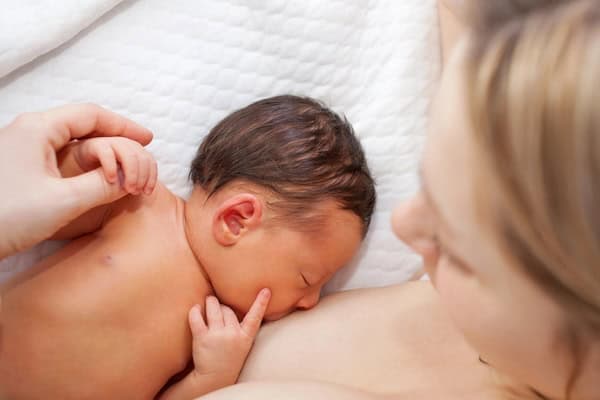
Physiological jaundice can’t be prevented. But you can reduce the chance of development by frequently feeding your newborn, which can help their bilirubin pass through the body more quickly.
If you or your doctor thinks there is a likely underlying issue that could cause jaundice in your newborn, there are tests that can verify this so that you or the baby can get preventive treatment if appropriate.
For example, during pregnancy, you can have your blood type tested to rule out the possibility of Rh incompatibility. If you’re Rh-negative, you can get intravenous immunoglobulin during pregnancy (not recommended by many doctors due to its severe and lifelong side effects).
Symptoms
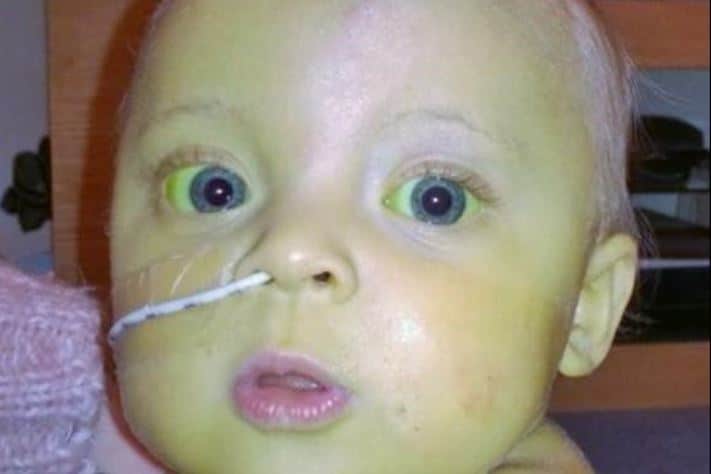
 The first sign of jaundice is the yellowing of a baby’s skin and eyes, which may start in the face before spreading across the body. With physiological jaundice, the yellowing may begin and peak within 2 to 5 days after birth. With other causes, it may begin closer to birth.
This yellowing can be harder to see in darker skin tones. Another way to tell is by pressing your finger lightly on the baby’s skin. The spot should briefly appear paler. If it looks more yellow and whites of their eyes look yellow, it’s likely a sign of jaundice.
If untreated, severe newborn jaundiced can lead to acute bilirubin encephalopathy, which is caused by the toxic levels of bilirubin in the brain.
A baby may get a fever, act listless and lethargic, have a shrill cry, refuse to feed, and curve their neck and body backward. This can, in turn, progress to kernicterus, which is permanent brain damage.
In many countries, many hospitals discharge birthing parents and newborns after 24-48 hours before jaundice may become very apparent. If the baby has not developed jaundice within 72 hours of delivery, they’re less likely to have the pathological form. But they can still develop the physiological form, leading to complications.
What does jaundice poop look like?
Newborns that develop jaundice can have a pale-colored stool, but not often. Most newborns with jaundice will have the same color stool as newborns without jaundice. It may begin as black, dark brown, or dark green in the first few days, and then transition to yellow or orange-colored stool. For this reason, it can be hard to recognize jaundice from the stool color alone.
Once you’re home, contact your doctor if you notice the following symptoms:
- Jaundice spreads or becomes more intense.
- Baby develops a fever over 100°F (38°C).
- Baby’s yellow coloring deepens.
- Baby feeds poorly, appears listless or lethargic, and makes high-pitched cries.
A newborn with jaundice may have dark yellow urine. As you feed the baby, it should become colorless. Make sure your baby urinate at least six times daily.
Risk factors
There are some things that can increase the chance of a newborn developing physiological jaundice.
These include:
- premature birth,
- history of newborn jaundice in siblings,
- being male assigned at birth (MAAB),
- being of Asian descent.
In addition, certain risk factors can increase baby’s chance of developing severe jaundice, which may be physiological or pathological. These include:
- jaundice within 24 hours after birth,
- birth before 40 weeks, with the chance increasing the earlier the baby is born,
- treatment with phototherapy or a history of a sibling being treated with phototherapy for jaundice,
- family history of inherited red blood cell disorders such as G6PD deficiency,
- difficulty breastfeeding,
- bruising on the head or scalp from the birth,
- having Down syndrome,
- Being born bigger than average for gestational age (macrosomia).
Diagnosis
 Though distinct yellow coloring confirms that a baby has jaundice, additional tests may be needed to determine the severity.
Babies who develop jaundice will get a bilirubin blood test to determine the levels of bilirubin in their blood.
Additional tests may be needed to see if a baby’s jaundice is due to an underlying condition. This may include testing the baby for their complete blood count (CBC), blood type, and Rh (Rhesus factor) incompatibility.
Additionally, a Coombs test may be done to check for antibodies that show an elevated risk of increased red cell breakdown (hemolysis).
Allopathic Treatment
Mild jaundice will usually resolve on its own as a baby’s liver matures. Frequent breast feedings (at least 8 times a day) will help babies pass bilirubin through their bodies.
More severe jaundice may require other treatments. Phototherapy (light therapy) is a common allopathic method of treatment that uses ultraviolet (UV) light to break down bilirubin in baby’s body; however, it does not help, treat or support liver.
In phototherapy, baby will be placed on a special bed under ultraviolet (UV) {a blue spectrum light} while wearing only a diaper and special protective goggles. A fiber-optic blanket may also be placed underneath the baby.
In very severe cases, an exchange transfusion (blood transfusion) may be necessary. This replaces the baby’s damaged blood with healthy red blood cells. This also increases the baby’s red blood cell count and reduces bilirubin levels (blood transfusion in any age and gender has sever and life-long side effects).
In addition, if there’s an underlying cause, the baby will need to be treated for the condition to resolve symptoms.
Homeopathic treatment for jaundice
 As I said earlier, mild jaundice will usually resolve on its own as a baby’s liver matures. Frequent breast feedings (at least 8 times a day) will help babies pass bilirubin through their bodies.
More severe jaundice may require proper Homeopathic treatments as phototherapy (sunlight therapy) is a common and highly effective method of treatment that uses sunlight to break down bilirubin in baby’s body. Natural option for phototherapy is morning and evening sunlight/sunbath.
Here are some links for the treatment of different types of jaundices:
→♠ If patient has acute viral hepatitis, Click Here for treatments.
⇒♠ If a blocked bile duct is to blame, Click Here for treatments.
→♠ If patient’s skin is itching, an allopathic doctor can prescribe cholestyramine (oral). This medication is used to remove bile acids from the body, which cause itching, while a Homeopathic doctor should advise treatment for root cause.
Most cases of physiological newborn jaundice will clear away, often without treatment. Frequent feedings will help it resolve. But a good doctor (especially Homeopath) will still monitor the patient to make sure it is improving.
The outlook of pathological jaundice depends on the underlying cause and what treatment the baby patient requires. In both cases, without immediate treatment, complications can begin to develop.
I (Dr Qaisar Ahmed) recommend that all newborn babies be examined for jaundice at least every 12 hours after birth and until their discharge from the hospital.